Publications
* Corresponding author.
In preparation / Under review
-
 Machine learning-derived surface tension in climate models and its implications for CCN activationin prep, 2026
 - Wall-conditioned mixing controls liquid water and droplet number in a fan-stirred expansion cloud chamber: iSKYLAB warm-cloud experiments in AIDAd and bin-microphysics simulationsin prep, 2026
-
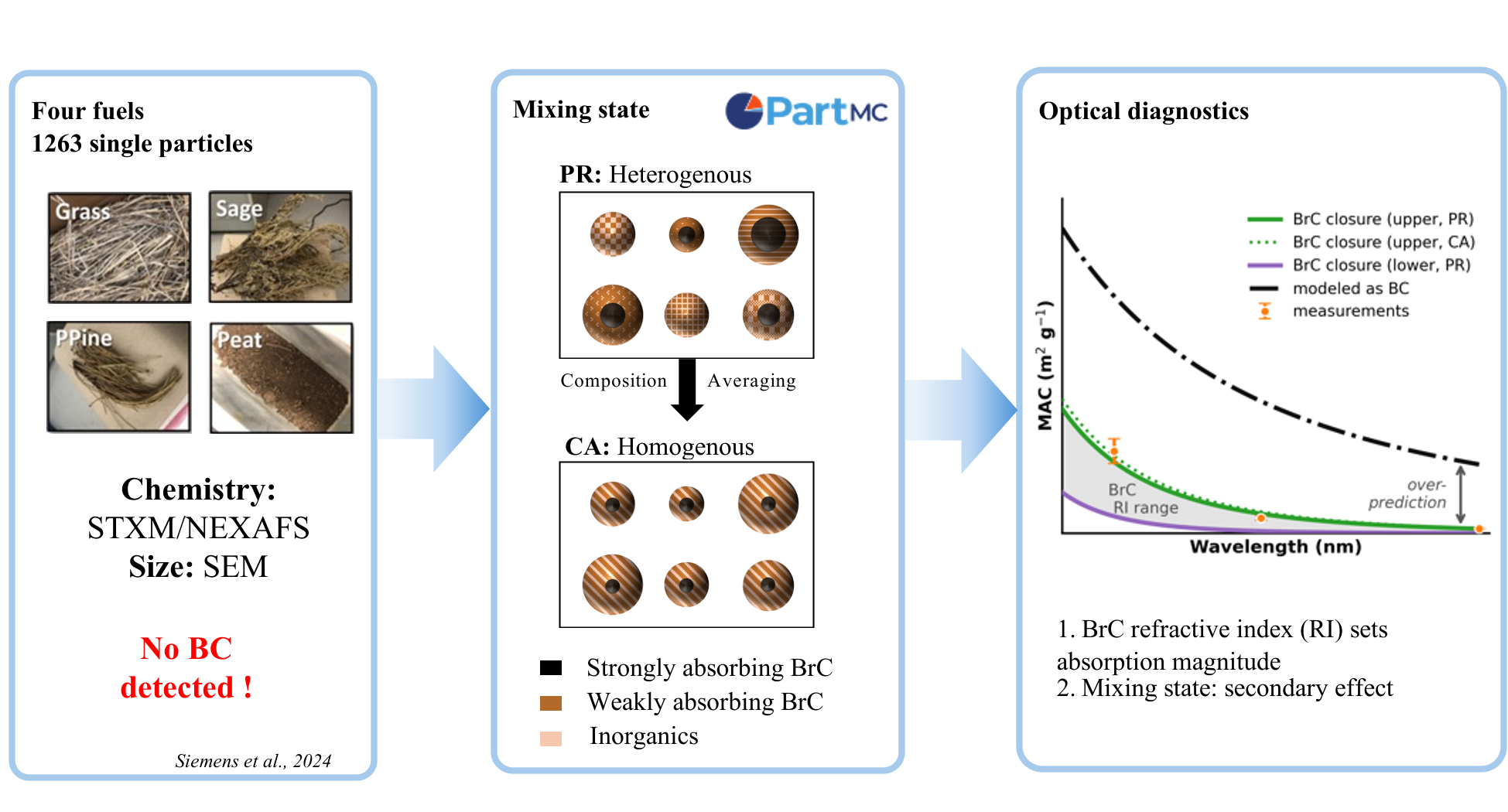 Diagnosing the Role of Mixing State in Biomass-Burning Aerosol Optical Properties Using Particle-Resolved Modelingunder review for Environmental Science: Atmospheres, 2026
 - Surfactant effects reshape the spatial pattern of aerosol-cloud forcingin prep, 2026
2026
- JGR Atmos.
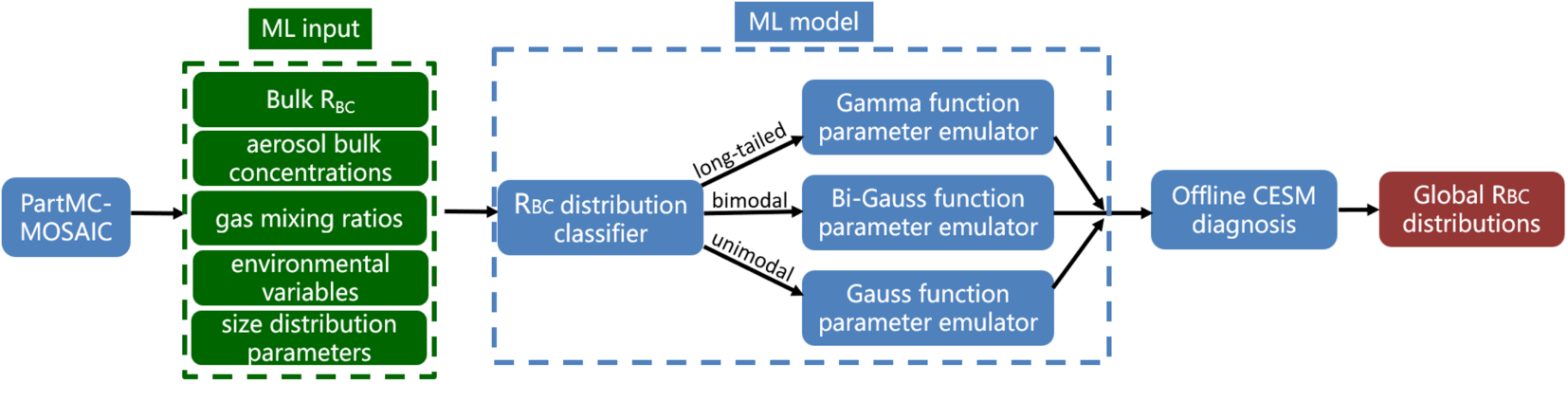 Quantifying Black Carbon Mixing State Heterogeneity Using a Machine Learning ModelJournal of Geophysical Research: Atmospheres, 2026 [link]
 - ACP
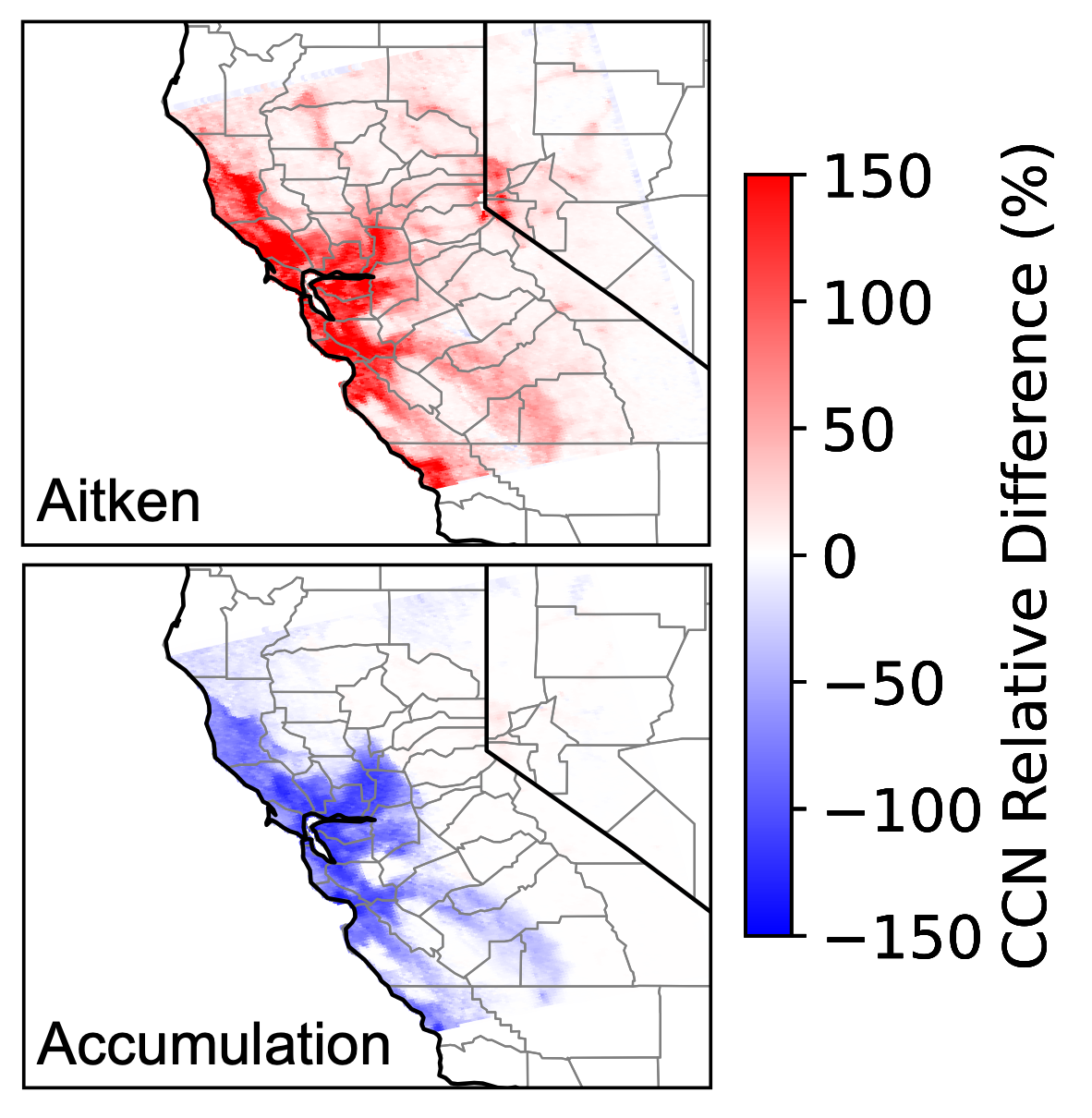 Compensating biases in CCN predictions from composition averaging and neglected surfactant effectsAtmospheric Chemistry and Physics, 2026 [link]
 - AST
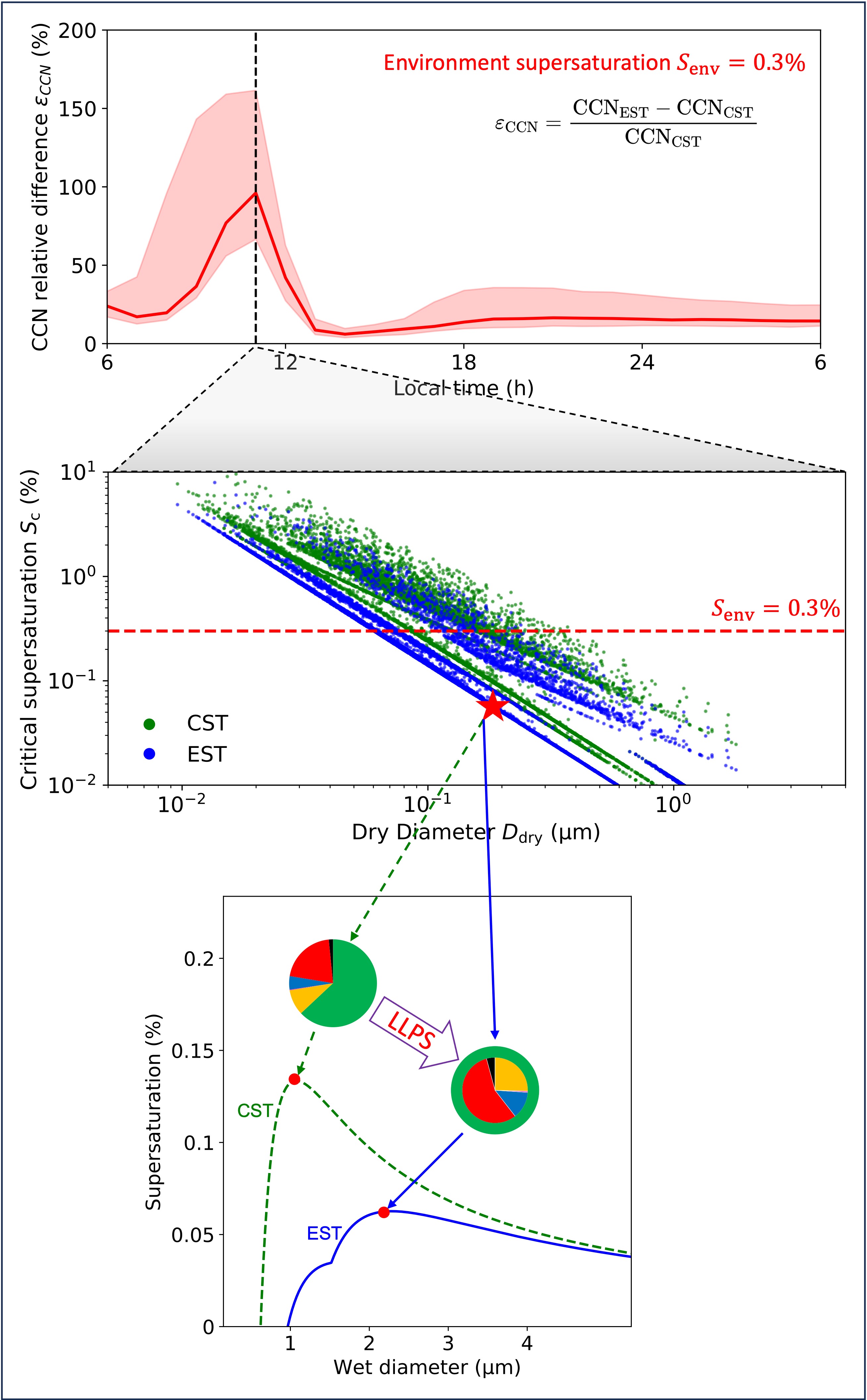 Role of liquid-liquid phase separation-induced surface tension changes in cloud droplet activationAerosol Science and Technology, 2026 [link]
Before PhD
- GMD
 Modeling the high-mercury wet deposition in the southeastern US with WRF-GC-Hg v1. 0Geoscientific Model Development, 2022 [link]
 - ES&T Lett.
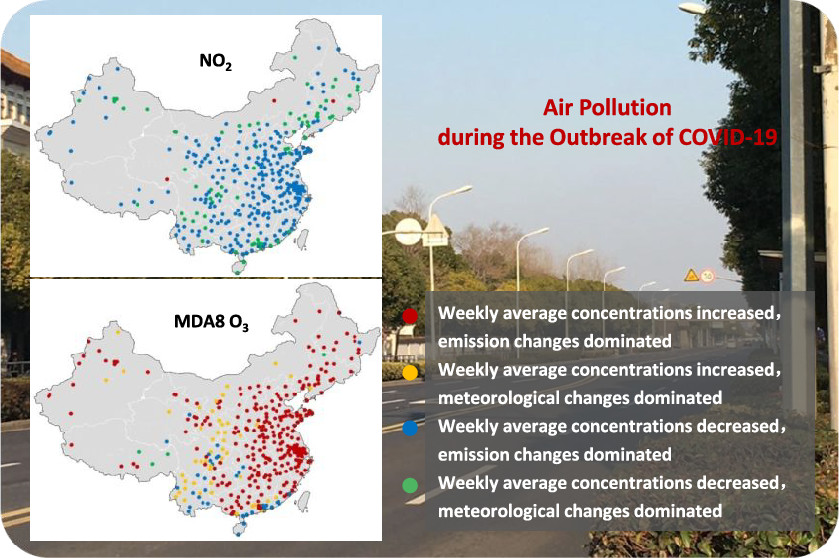 Substantial changes in nitrogen dioxide and ozone after excluding meteorological impacts during the COVID-19 outbreak in mainland ChinaEnvironmental Science & Technology Letters, 2020 [link] [Best ES&T Letters Papers in 2020]
 - Atmos. Res.
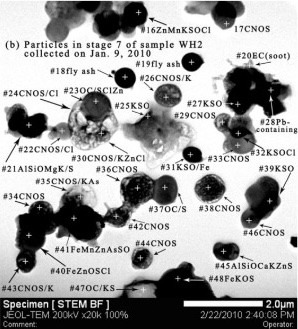 Characterization of size-resolved urban haze particles collected in summer and winter at Taiyuan City, China using quantitative electron probe X-ray microanalysisAtmospheric Research, 2017 [link]
 - J. Anhui Agric. Sci.
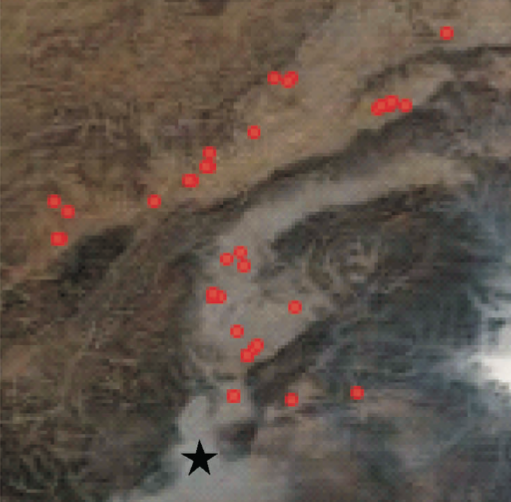 Influences of Biomass and Coal Burning on Ambient Fine Particulate Matter over Taiyuan CityJournal of Anhui Agriculture Science, 2016 [link]